
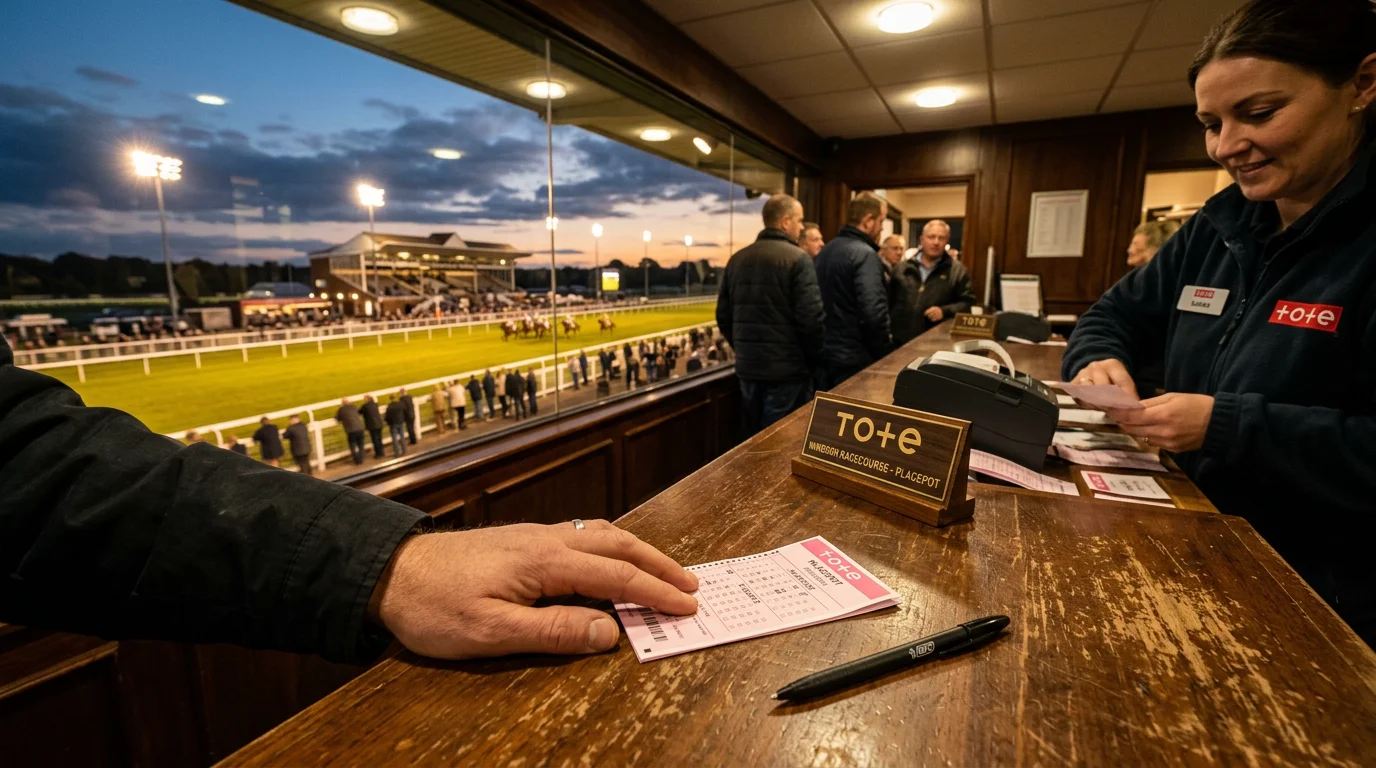
The Placepot Is Windsor’s Best-Kept Evening Bet
Pool betting in British racing generates serious money — the Gambling Commission’s annual figures for the year ending March 2025 put online horse racing gross gaming yield at £766.7 million, a number that includes both fixed-odds and pool products. Within that ecosystem, the Tote Placepot occupies an odd niche: it is one of the few bets where disciplined approach and modest stakes can produce outsized returns, yet most casual punters either ignore it or enter randomly.
Windsor’s evening format makes it a natural Placepot venue. A standard Monday card runs six races, occasionally seven — exactly the kind of compact programme where a structured perm can survive the full card without demanding a huge outlay. The fields are manageable, the form tends to be readable, and the pools, while smaller than those at weekend festivals, often pay dividends that dwarf what a single-race bet would return. This guide covers the mechanics, the perm maths, and the banker-selection logic that turns a Placepot entry from a punt into a plan.
How the Placepot Works Across Windsor’s 6–7 Races
The Placepot requires you to find a placed horse in each of the first six races on a card. A horse counts as placed if it finishes in the places according to standard Tote place terms — typically first or second in fields of five to seven runners, first to third in fields of eight or more. If your selection places in all six races, you win a share of the pool. If it fails in any single race, the entire entry is dead.
You do not have to select just one horse per race. You can pick two, three, or more in any leg — and this is where the perm structure comes in. Each additional selection in a leg multiplies the total number of lines. One horse in each of six races is a single line. Two horses in the third race doubles the total to two lines. Two horses in three separate races produces eight lines. The minimum unit stake is 1p per line through the Tote, with a minimum total entry of 50p, so an eight-line perm at 10p per line costs 80p.
At Windsor, six-race cards are standard for flat evenings. When a seventh race is added, the Placepot still covers only the first six — the seventh race is irrelevant to the pool. This is a detail that trips up first-timers: if the first race on the card is, say, the 5:30, that is leg one of the Placepot regardless of what follows. Check the racecard or the Tote app to confirm which races are included before you submit.
The pool is funded by all entries across the meeting. After the sixth race, the total pool (minus the Tote’s deduction, currently around 27% before any rollover or guarantee adjustments) is divided among all winning unit stakes. On a Monday evening at Windsor, the pool might be relatively modest — a few thousand pounds — but a small pool means fewer winning entries, and dividends can spike when a surprise result knocks out the majority of tickets. It is not unusual to see a Placepot at a midweek evening meeting pay £200 or more to a 10p unit on a card that produced one or two unexpected placers.
Perm Design: How Many Lines You Actually Need
The temptation with Placepot perms is to cover every race with multiple selections. The problem is that line counts escalate fast. Two horses in each of six races gives 64 lines (2 x 2 x 2 x 2 x 2 x 2). Three horses in two of those races pushes it to 144. At 10p per line, 144 lines costs £14.40 — not ruinous, but not trivial across a season of 22 flat fixtures at Windsor. At 50p per line, that same perm runs to £72.
The smarter approach is to vary your coverage by race. Use one selection — a banker — in races where you have strong confidence, and two or three in races where the form is open. A structure like 1-2-1-3-2-1 produces 12 lines (£1.20 at 10p), which is manageable and forces you to make decisions rather than hedge everything. Windsor’s 26 scheduled fixtures in 2026 give you plenty of opportunities to refine the approach — consistency of method matters more than nailing any single card.
A useful guideline: keep your total Placepot outlay below 5% of your session bankroll. If you have allocated £50 for a Monday evening, that means a maximum of £2.50 on the Placepot — 25 lines at 10p. Structure the perm so the line count fits the budget, not the other way around. Start with your bankers, then decide how many races genuinely need multiple selections.
One structural trick that experienced Placepot players use at Windsor is to concentrate coverage in the handicaps and bank the non-handicaps. Conditions races and novice stakes — which often appear first or second on the card — tend to be dominated by shorter-priced horses whose placing probability is already high. The handicaps, particularly those with ten or more runners, are where results scatter and where your perm needs depth. A 1-1-2-3-2-1 structure that banks the opener and the closer while spreading the middle-card handicaps is a common template for Windsor evenings.
Picking Bankers: Trainers and Jockeys Who Place Consistently
A Placepot banker is a horse you trust to place — not necessarily to win. The distinction matters, because the traits that predict placing differ from those that predict winning. You want reliability, not brilliance. A horse that finishes first or second in 50% of its starts but wins only 15% of the time is an ideal Placepot banker; a flashy front-runner with a 30% win rate but a habit of fading to fifth when it does not lead is not.
Trainer identity is one of the better filters for identifying reliable placers at Windsor. The five-year data shows that certain yards produce horses that consistently hit the frame. J J Bridger’s runners, for instance, record an each-way level stakes profit of +59.71, driven by a placing rate that comfortably exceeds what the market prices in. Nicola Currie’s rides tell a similar story from the jockey side, with an each-way LSP of +45.52 — three wins and eight places from relatively few rides, suggesting that when she is booked at Windsor, the horse is expected to run into a position rather than dominate.
For Placepot purposes, the relevant question is not whether these riders or trainers produce winners, but whether their runners place at a rate that justifies banking them. If a trainer’s horses place in 35-40% of their Windsor starts, banking one of them in a leg is a reasonable structural choice — it keeps your perm tight and lets you spread coverage elsewhere.
Pool products like the Placepot exist because horse racing and gambling are, as Lord Grade observed in evidence to the House of Lords, fundamentally interlinked — racing is one of the most recognisable products on which people bet, and the Placepot channels that engagement into a format that rewards method over staking power. The edge, if there is one, comes not from backing the obvious favourite in every leg but from identifying which legs genuinely need multiple selections and which can be banked with a reliable placer. Windsor’s form patterns — trainer habits, jockey booking trends, ground preferences — provide the raw data. The perm structure turns it into a plan.
One Number to Watch Before Every Placepot Entry
Before submitting a Placepot perm at Windsor, check the number of declared runners in each leg. That single piece of information tells you more about the structure of your perm than anything else. A leg with five runners pays only two places — your banker needs to be genuinely strong. A leg with twelve runners pays three places — you can afford to be bolder with selections or even bank a reliable type at a bigger price.
The Placepot rewards patience and structure over intuition. Windsor’s compact evening cards — six races, moderate fields, readable form — are about as good an environment as you will find for developing a repeatable method. Set a budget, build the perm around bankers you trust, spread coverage in the open races, and review what worked (and what did not) after each meeting. The dividends will vary wildly from card to card, but the process stays the same.