
 Available in US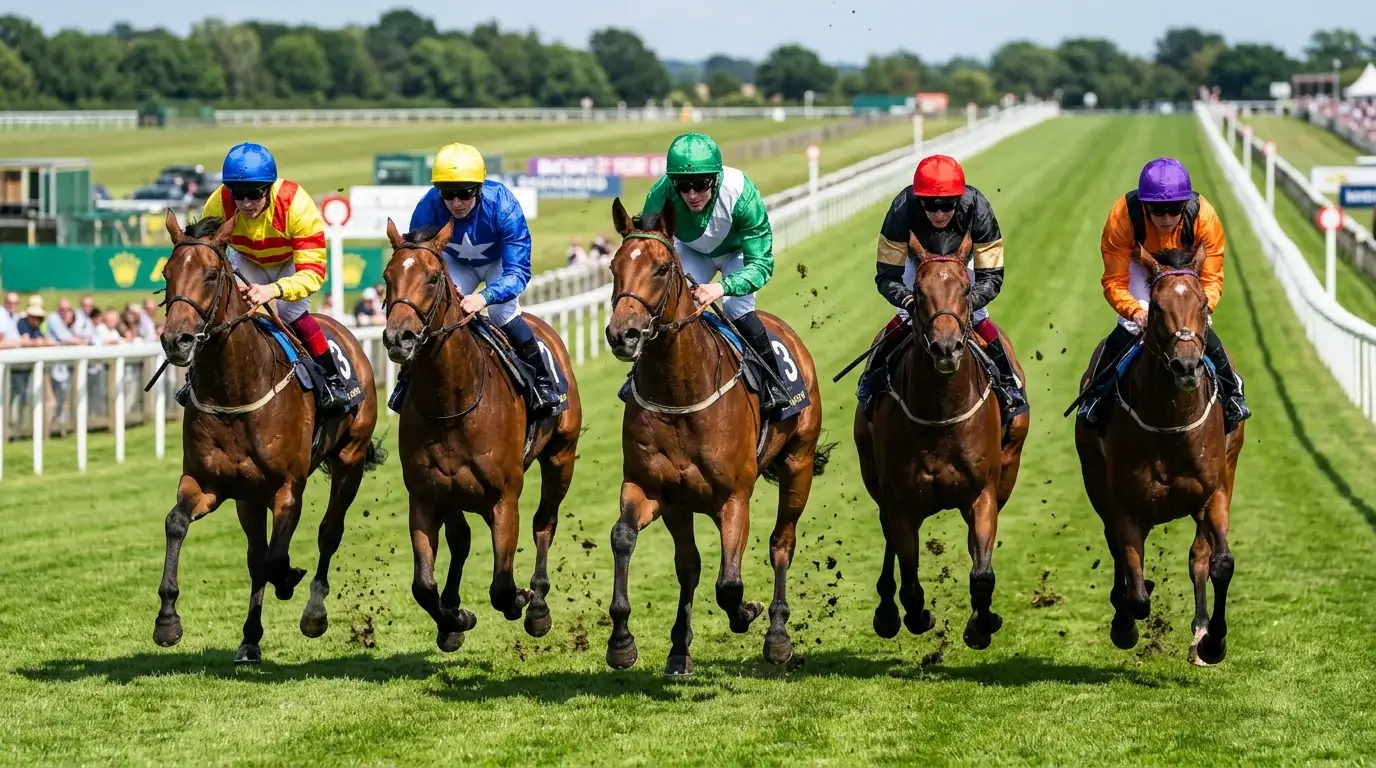
Sprints at Windsor Leave No Room for Error — for Horse or Punter
Sprint races are the shortest, fastest and least forgiving events on any Windsor card. At five furlongs the race is over in roughly sixty seconds; at six, perhaps seventy-five. A slow break, a stumble out of the stalls, a jockey caught flat-footed on the first turn — any of these can end a horse’s chance before the field has covered two furlongs. For the bettor, that compression of time and opportunity means the pre-race analysis carries more weight than in any other type of race. There is no mid-race recovery at these distances. Windsor Sprint Betting — More on this topic at windsor betting.
The headline figure at five furlongs remains stall 4’s five-year LSP of +94.38 — the most profitable stall-distance combination on the course. At six furlongs, the picture shifts: a slight high-draw advantage replaces the middle-stall dominance of the shorter trip. These are different races demanding different approaches, and this guide covers both — from form reading to staking — with the aim of turning Windsor’s sprint programme into a structured betting opportunity rather than a punt on speed.
5f vs 6f: What One Extra Furlong Changes
The difference between five furlongs and six at Windsor is not simply a matter of distance. The two trips start from different points on the track, feed into different sections of the figure-of-eight, and produce measurably different draw biases. Treating them as interchangeable sprints is a common mistake.
At five furlongs, the race is run almost entirely on the straight, with only a slight right-handed kink roughly three furlongs from home where the two loops of the figure-of-eight intersect. That kink — and the far rail beyond it — means horses drawn high, closest to the far rail, tend to hold a structural advantage, particularly on soft ground. The pace bias is at its most extreme: front-runners win at roughly four times the rate of hold-up horses, and there is no straight long enough for a closer to make up lost ground. The single most profitable stall-distance combination is stall 4 at 5f (LSP +94.38), but the broader pattern favours higher stalls — especially when the ground rides soft and a strip of faster turf appears along the far rail. The optimal profile is a prominent racer from a favourable draw on suitable ground.
At six furlongs, the start is further back on a chute that joins the round course at the top of the home straight. That extra furlong gives the field a longer run before the kink and slightly more time to establish position. The data shows a slight but consistent high-draw advantage at six furlongs — a pattern that holds across both good and soft going, though it becomes more pronounced on softer ground. The pace bias remains strong but is marginally less extreme — there is just enough additional race for a horse held up in third or fourth to make ground in the closing stages, provided the run-in is not contested by a wall of front-runners.
The practical consequence is that your draw filter needs to adjust between the two distances. At five furlongs, look first for stall 4 — the single most profitable position — and then for higher-drawn horses, especially when the going is soft. At six furlongs, the high-draw preference is broader and more consistent. Applying a single rule universally across both distances will lead to systematic mispricings in your analysis.
Reading Sprint Form: Speed Figures, Class and Course Form
Sprint form at Windsor rewards a specific type of analysis. The variables that matter most are speed, track suitability, and recent form at the distance — in that order.
Speed figures, where available, are the most objective measure of a horse’s sprint ability. Services like Timeform, Racing Post Ratings (RPR), and Proform assign numerical values to each performance, allowing you to compare horses that have not raced against each other. A horse that recorded a speed figure of 85 over five furlongs at Lingfield three weeks ago is directly comparable to one that recorded 82 over the same trip at Windsor last month. In sprint races, where margins are small and finishing times are compressed, a three-point speed figure advantage is significant.
Course form carries extra weight at Windsor because even the sprint distances include a right-handed kink where the two loops of the figure-of-eight intersect. A horse with three runs at Windsor showing consistent form — even if none of those runs produced a win — has demonstrated an ability to cope with the track’s demands. A horse with brilliant speed figures from Newmarket but no Windsor experience is a less certain proposition: the kink, the camber, and the rail positions may not suit.
Class is the final filter. Sprint handicaps at Windsor range from Class 3 to Class 6, and the quality gap between tiers is real. A horse dropping from a Class 3 sprint at Ascot to a Class 5 at Windsor on a Monday evening may be running against significantly weaker opposition, even if its official rating has not changed. Class drops in sprint races are particularly effective because the margins at these distances are so thin — a horse that is two or three lengths better than its rivals wins comfortably in a sprint, whereas the same advantage might be absorbed over a mile.
Staking Adjustments for Sprint Races
Sprint results at Windsor cluster into two categories: predictable races where the form and draw align and the right horse wins at a fair price, and chaotic races where a poor break or traffic problem upends the formbook in the first five seconds. The challenge for staking is that you cannot tell in advance which type of race you are watching.
The prudent adjustment is to keep your unit stake consistent but be more selective about which sprint races you bet on. A sprint with a clear pace map — one or two obvious front-runners, a transparent draw advantage, and a form horse that fits the profile — is a strong betting race. A sprint with five or six speed horses drawn across the stalls, where the early pace is likely to be fierce and the result depends on which horse breaks cleanest, is closer to a coin toss. Identify the former and bet; identify the latter and sit it out.
Each-way betting in sprints requires specific caution. In small-field five-furlong races — six or seven runners — only two places are paid, and the margins between placed horses are often tiny. A horse that finishes third by a neck misses the each-way payout entirely. Win-only betting is generally sharper at five furlongs unless the field exceeds eight runners. At six furlongs, where fields tend to be slightly larger, each-way becomes more viable.
The Sprint Bettor’s Pre-Race Routine
Richard Wayman, the BHA’s Director of Racing, has observed that British racing faces real challenges alongside its strengths — the horse population is declining, the betting environment remains demanding. Within that landscape, Windsor’s sprint programme offers one of the more pattern-rich betting environments in the flat calendar. The data on draw, pace, and running style is robust, the fields are analysable, and the edges — while not guaranteed — are structurally repeatable. See also Betting on Windsor Mile Races.
Before every sprint at Windsor, run through the sequence: check the distance (5f or 6f — different draw rules apply), check the draw, check the horse’s running style (front-runner or closer), check the going, and assess the pace map. If the profile aligns — prominent racer, favourable draw, suitable ground, readable pace — you have a selection. If it does not, you have a race to watch rather than a race to bet. No room for error means no room for shortcuts.
