
 Available in US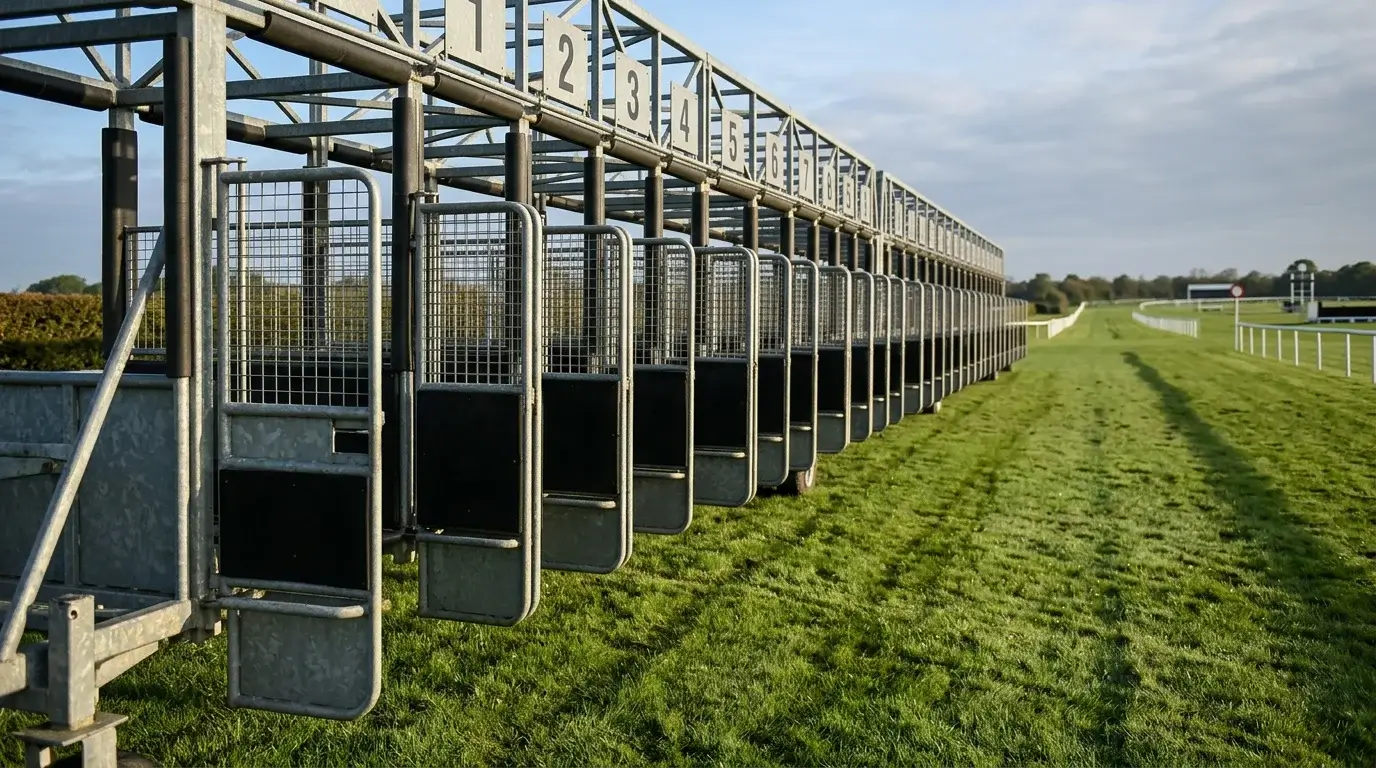
«High Draw Is Always Better at Windsor» — But Is That Actually True?
It is one of the most confidently repeated claims in British flat racing: at Windsor, you want a high draw. The logic sounds plausible. The figure-of-eight layout funnels runners towards the far rail on certain bends, and horses drawn high — nearer that rail from the start — save ground. Type it into any racing forum and you will find the same advice delivered with the certainty of someone who has never actually checked the numbers. Is High Draw Better at Windsor? Stall Position Data Reviewed — More on this topic at windsor betting.
The numbers tell a different story. According to DrawBias.com’s five-year analysis, the high-draw advantage at Windsor is real at some distances, marginal at others, and flatly contradicted at the one trip where draw bias matters most. At six furlongs, there is a slight edge for higher-numbered stalls. At a mile, the statistical support is weak enough that calling it an advantage requires generous interpretation. And at five furlongs — where draw data is loudest across the entire course — it is the middle stalls, not the high ones, that produce the best returns.
This article unpacks the claim distance by distance, explains why small samples distort the picture, and identifies the narrow conditions under which high stalls genuinely help.
The Myth and the Data: Distance by Distance
The simplest way to test the high-draw claim is to look at what actually happens at each distance. Five years of results, broken down by stall position and trip, produce a picture far less tidy than the forum wisdom suggests.
At five furlongs, the data directly contradicts the high-draw narrative. The most profitable stall over five years is stall 4, with a level stakes profit of +94.38 points — a low-to-middle draw, not a high one. Stalls 3 and 5 also show positive returns. The high-numbered stalls — 7, 8, 9 — trend negative. Five furlongs at Windsor is a race where the geometry of the start and the first turn favours horses in the centre of the stalls, not on the outside. Anyone blindly backing high draws at this trip is betting against the strongest draw signal on the course.
At six furlongs, the picture shifts. There is a slight advantage for higher-numbered stalls, borne out across multiple seasons. The effect is not dramatic — it is a tilt rather than a bias — but it is consistent enough to register. Horses drawn 7 or above at six furlongs have a marginally better win and place record than those drawn low, particularly in fields of ten or more where the early positional battle is more intense. The explanation is geometric: the six-furlong start feeds into a different section of the figure-of-eight, and the racing line from higher stalls offers a cleaner route into the first bend.
At one mile, the high-draw advantage is statistically weak. It exists in the data, but only just, and the margins are narrow enough that a handful of results in either direction would eliminate it. In larger fields there is a slight suggestion that high-drawn runners fare better, likely because a wide draw avoids traffic on the first turn. In smaller fields — which Windsor’s evening mile races often produce — the draw is close to neutral. Jockeyship and pace judgement matter far more over this trip than stall position.
At 1m2f and beyond, draw bias is negligible. The longer the race, the more time jockeys have to settle their mounts and find a position, and whatever advantage a high or low draw confers in the first furlong has been erased long before the field reaches the home straight. At these distances, the question is irrelevant for practical purposes.
The summary: high draw helps slightly at six furlongs, barely at a mile, not at all over longer trips, and actively underperforms at five furlongs. That is not a universal advantage. It is a distance-specific, condition-dependent tilt — and treating it as anything more is a recipe for mispriced bets.
Small Sample Sizes: The Reason Most Draw Stats Lie
Even where the data suggests a draw advantage, the confidence you can place in it depends heavily on the number of runners that contributed to the figure. This is the part of draw analysis that most punters skip — and it is the part that matters most.
Windsor runs around 22 flat fixtures a year. Not every meeting includes a five-furlong race. Not every five-furlong race has a horse drawn in stall 9. Over five years, the total number of runners from any individual stall at any individual distance might be somewhere between 30 and 80 — depending on the distance and how common that field size is. At six furlongs, where fields are slightly larger on average, sample sizes per stall are reasonable. At a mile, where Windsor often cards races with seven or eight runners, the high stalls (8, 9, 10) might have fewer than 20 data points across the entire five-year window.
Twenty data points is not enough to establish a reliable pattern in a sport where individual races are influenced by dozens of variables — ground, pace, fitness, jockey tactics, interference, the mood of the horse on the day. A single big-priced winner from stall 9 at a mile can swing that stall’s LSP from negative to strongly positive without reflecting any genuine structural advantage. The same applies in reverse: one favourite from a high draw that gets boxed in on the first turn and finishes last can drag down an otherwise neutral record.
The practical rule is to distrust any draw statistic based on fewer than 40 runners. Below that threshold, variance is too high to distinguish signal from noise. At Windsor, this means the five-furlong data (where fields are consistent and the sample is decent) is more trustworthy than the mile data (where fields vary and high stalls are less frequently occupied). It also means that stall-specific LSP figures should be treated as indicative rather than prescriptive. A stall showing +94.38 over five years from 60+ runners is meaningful. A stall showing +30.00 from 18 runners is not.
The best draw analysts do not bet on stalls in isolation. They use draw data as one filter among several — pace, form, ground preference, trainer intent — and they weight its influence according to the sample size behind it. At five furlongs, where the sample is robust and the pattern is consistent, the draw filter deserves significant weight. At a mile, it deserves a glance and nothing more.
The Specific Conditions Where High Stalls Actually Help
Strip away the blanket claim and there is a narrow set of circumstances where a high draw at Windsor provides a genuine, data-supported advantage. Identifying those circumstances — rather than applying the rule everywhere — is what separates useful draw analysis from pub wisdom.
The clearest case is six furlongs on soft going. Analysis of going conditions at Windsor shows that when the ground is testing, the inside rail tends to ride heavier than the centre and far side of the track. The Thames basin’s drainage patterns create uneven moisture distribution, and horses drawn high — who naturally gravitate towards the far rail — race on ground that may be less cut up. The effect is amplified at six furlongs, where the initial dash for position forces inside-drawn horses to race on the most trafficked strip. On good ground, this advantage largely disappears, and the high-draw edge at six furlongs shrinks to a marginal tilt.
The second case is large fields at six furlongs or a mile. When twelve or more runners line up, the traffic problems multiply for low-drawn horses. Getting squeezed, losing position on the first turn, or being forced to race wide to find daylight are all more likely in a crowded field. Horses drawn high in these fields start with cleaner air and a more direct route to the far rail. The advantage is positional rather than ground-related, and it applies on any going — but it only manifests when the field is large enough to create genuine congestion.
Outside these two scenarios — soft going at sprint distances, and large fields at up to a mile — the high-draw advantage at Windsor is either statistically insignificant or actively misleading. At five furlongs on any going, middle stalls are better. At a mile in small fields, the draw is neutral. At 1m2f and beyond, it does not matter at all.
A Smarter Question Than «High or Low?»
The question itself is the problem. Asking whether high draw is better at Windsor is like asking whether it is better to bat first in cricket — the answer depends on conditions, and a blanket yes or no will be wrong half the time. Richard Wayman, the BHA’s Director of Racing, made a related point when discussing betting turnover trends: there is a «much wider range of factors» behind any single outcome than a single variable can capture. The same logic applies to draw analysis. Stall position is one input, not the answer.
The smarter question is: at this distance, on this going, in a field of this size, does the draw give my selection a structural advantage or disadvantage? Framed that way, the five-year data becomes a tool rather than a system. It tells you to pay attention at five and six furlongs, to factor in the going when it is soft, to note field size when it exceeds ten or eleven runners, and to ignore the draw almost entirely at a mile or beyond. See also Windsor Monday Night Racing.
Five years of data, one nuanced answer: high draw helps at Windsor, but only sometimes, only at certain distances, and only under specific ground conditions. The rest of the time, the horse matters more than the stall it starts from.
