
 Available in US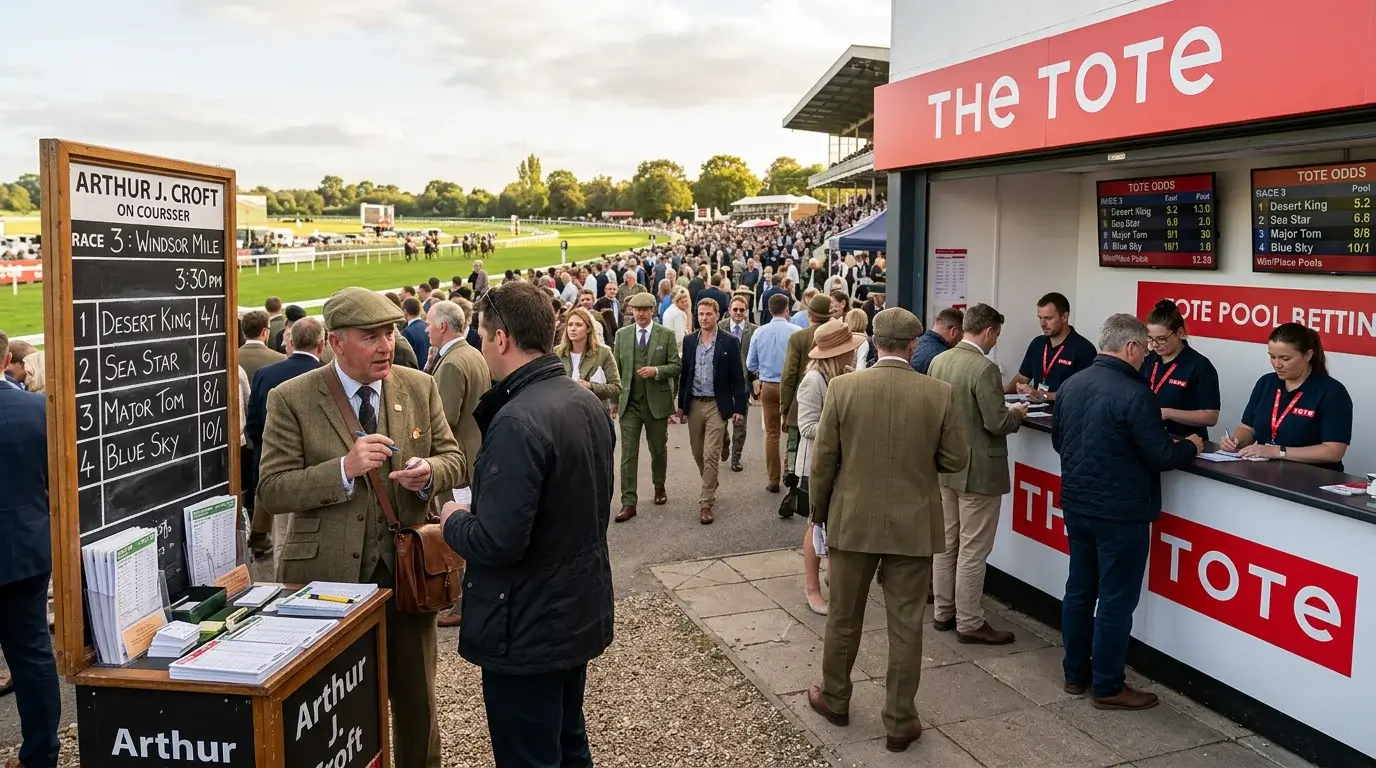
Five Ways to Bet on the Same Race — and They Don’t All Suit the Same Bettor
A single race at Windsor can be approached through at least five distinct bet types: win-only, place-only, each-way, Tote pool, or fixed-odds exotic (forecast and tricast). Each operates under different mechanics, different payout structures, and different risk profiles. Choosing between them is not a matter of preference — it is a tactical decision that should change from race to race depending on field size, your level of conviction, and the prices available. Windsor Racecourse Betting Types Compared — More on this topic at windsor betting.
The scale of the market underlines why the choice matters. The Gambling Commission’s annual report for the year ending March 2025 records £766.7 million in gross gaming yield from online horse racing alone — a figure that encompasses every bet type from straightforward win singles to complex accumulator and pool bets. The bookmaker’s margin is embedded in all of them, but the size of that margin and the way it affects your expected return varies significantly between bet types and between races. This guide maps the landscape so you can match the right bet to the right race at Windsor.
Win and Place: The Simplest Bets Explained
A win bet is the purest form of racing wager. You back a horse to finish first. If it does, you collect at the agreed odds; if it does not, you lose your stake. The appeal is simplicity: one question, one answer, one outcome. Win betting suits races where you have strong conviction about the winner and the odds reflect fair or generous value.
A place bet backs a horse to finish in the places — first, second, or third depending on the number of runners. Place odds are typically a quarter of the win odds (the same fraction used in each-way). Place-only betting is less common in UK racing than in some other markets, but it is available through the Tote and some fixed-odds bookmakers. It suits situations where you rate a horse highly but the win price is too short to offer value — by backing place-only, you accept a lower return in exchange for a higher probability of collection.
At Windsor, win betting is strongest in small-field conditions races where a clearly superior horse is fairly priced. Place betting is strongest in larger-field handicaps where you fancy a horse to run into the frame but cannot confidently predict it will beat the entire field. The two are not interchangeable: a horse that is value as a win bet is not necessarily value as a place bet, and vice versa. The right choice depends on the specific race, not on personal habit.
Each-Way at a Glance: When It Beats Win-Only
Each-way is a combined win-and-place bet at equal stakes. It outperforms win-only when a horse’s placing probability is significantly higher than its win probability — the consistent placer at a double-digit price. The trainer J J Bridger, with an each-way LSP of +59.71 over five years at Windsor, exemplifies the type of runner that profits each-way bettors: horses that hit the frame at rates the market underprices.
Each-way is weakest in small fields (under eight runners, where only two places are paid), at short prices (where the place fraction returns a negligible amount), and in races where the favourite is odds-on (where the place part of a favourite’s each-way bet returns less than the win stake). At Windsor’s evening meetings, the handicaps with eight to twelve runners are the natural each-way habitat; the conditions races and novice stakes with five to seven runners are not.
The key discipline with each-way is to assess the two parts independently. Ask: is this horse value to win? Is it value to place? If the answer to both is yes, each-way is the right bet. If only the place part looks attractive, a place-only bet (where available) is more efficient. If only the win part looks right, win-only is sharper.
Tote Pools vs Fixed Odds: When the Pool Pays More
Fixed-odds betting locks in a price at the moment of the bet. You know what you will be paid if you win. Tote pool betting puts your stake into a shared pot, and the dividend is calculated after the race based on the total pool and the number of winning tickets. The two systems produce different returns on the same result, and at Windsor the difference can be significant.
Tote pools tend to offer better value than fixed odds in two scenarios. The first is when a longshot wins or places. In a fixed-odds market, the bookmaker prices every runner with a built-in margin, but longshots carry the heaviest margin — a horse priced at 25/1 with a bookmaker might pay 30/1 or more through the Tote if few pool bettors backed it. The smaller the pool and the less popular the winner, the larger the Tote dividend relative to SP. Windsor’s Monday evening pools are modest, which means this effect can be pronounced when an outsider fills the frame.
The second scenario is the Placepot and other multi-race pool bets, where the cumulative nature of the pool creates dividends that single-race bets cannot match. A Placepot dividend of £200 to a 10p unit — not unusual on a Monday evening where a surprise result appears in one or two legs — represents a return that no accumulator at equivalent stake would replicate through fixed odds.
Fixed odds are better when you are backing a fancied horse at a price you have assessed as value. Best-odds-guaranteed promotions ensure you receive the higher of your price or SP, which is a free enhancement that Tote bets do not offer. For shorter-priced selections in competitive races, fixed odds with BOG generally outperform the Tote.
The practical approach at Windsor is to default to fixed odds for win and each-way singles, switching to Tote when you are backing an outsider or when the specific pool product (Placepot, Exacta, Trifecta) offers a structural advantage. Do not use one system exclusively — match the betting vehicle to the specific opportunity.
One additional consideration: the Tote Exacta and Trifecta pools at Windsor’s evening meetings can produce inflated dividends precisely because fewer people contribute to the pool. A Tote Exacta involving two outsiders at a Monday evening meeting might pay three or four times what the equivalent Computer Straight Forecast returns from a fixed-odds bookmaker. If you have identified a plausible but unpopular finishing order, the Tote pool is the vehicle that rewards that insight most generously. See also How to Read a Windsor Racecard.
Match the Bet Type to the Race, Not to Habit
The best bet type for any race at Windsor depends on three things: the field size, the price of your selection, and your level of conviction. Small fields with a strong fancy: win-only. Larger fields with a consistent placer at a big price: each-way. Outsiders in modest pools: Tote. Multi-race engagement at small outlay: Placepot. Readable pace map with a clear top three: forecast or tricast. None of these is universally correct. The punter who matches the bet type to the race, rather than defaulting to the same format out of habit, extracts more value across a Windsor season than the one who bets each-way on everything regardless of the conditions.
