
 Available in US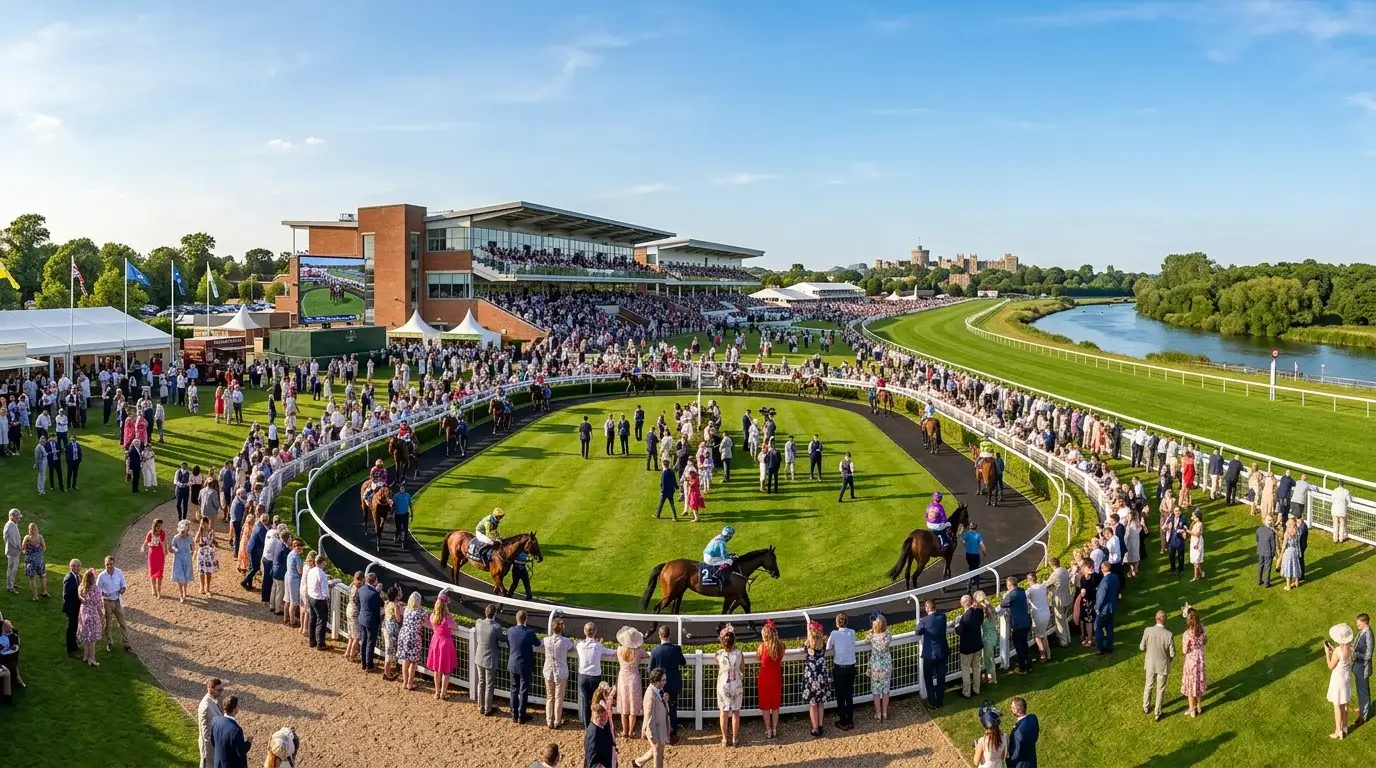
Windsor Is One of the Few Courses Where You Can Arrive by River
Royal Windsor Racecourse sits on an island in the Thames — the only racecourse in Britain with that distinction. It is also the only course in the country accessible by river boat from a major town centre, with services running from Windsor Promenade during summer meeting days. Arriving by water is not just a novelty: it sets the tone for an evening that feels more intimate and less industrial than the big-venue experience at Ascot or Epsom. Windsor Race-Day Experience — More on this topic at windsor betting.
For the bettor visiting Windsor in person, the race-day experience is shaped by the venue’s compact layout. Everything is close together — the parade ring, the bookmakers’ pitches, the stands, the Tote windows. You can study a horse in the paddock, walk thirty seconds to a bookmaker, place your bet, and be in position to watch the race inside two minutes. That efficiency matters on a six-race card where the intervals between races are roughly 25 minutes: there is enough time to do your homework, but not enough to waste on navigating a sprawling site.
Enclosures Explained: What Each Ticket Gets You
Windsor operates multiple enclosures, each offering a different combination of access, facilities, and atmosphere. The pricing structure varies by meeting — feature race days cost more than standard Monday evenings — but the general hierarchy remains consistent.
The Paddock Enclosure is the standard admission level for most Windsor meetings. It gives you access to the main viewing areas, the parade ring, the betting ring where on-course bookmakers operate, and the Tote windows. For the punter whose priority is studying the horses and placing bets efficiently, the Paddock Enclosure provides everything you need. The view of the home straight is adequate from the main stand, and the proximity to the bookmakers means you can react to late market moves without sprinting across the site.
The Royal Enclosure (or Premier Enclosure, depending on the meeting) offers a higher-specification experience: closer proximity to the winning post, access to additional hospitality areas, and generally better sightlines for the finish. For punters who want to see the final furlong in detail — particularly useful for assessing how horses finish, which informs future bets — the premium enclosure is worth considering on feature race evenings.
The BHA’s 2025 figures record an average attendance of 3,526 per meeting across all British racecourses, and Windsor’s Monday evenings typically sit around or slightly below that figure. The crowd is large enough to create atmosphere but small enough that you will never feel overcrowded in any enclosure. Queues at bookmakers and Tote windows are manageable, even in the final minutes before a race — a practical advantage over festival-sized venues where a two-minute queue can cost you the price you wanted.
On-Course Bookmakers and Tote Windows: A Quick Guide
The betting ring at Windsor houses a row of on-course bookmakers, each displaying prices on boards or electronic screens. Walking the ring and comparing prices takes less than a minute — the pitches are close together, and you can see most of the boards from a single vantage point. This is one of the advantages of a compact course: the odds comparison that requires an app or a website when betting online is a visual exercise at Windsor, completed in a few glances.
On-course bookmaker prices are fixed at the time of the bet. If you take 5/1 with a rails bookmaker, that is your price regardless of what happens to the market between then and the off. This distinguishes on-course betting from SP (starting price) bets, where the official price at the time the stalls open determines your return. Taking a price early with an on-course bookmaker is advantageous when you believe the horse will shorten — if the market moves from 5/1 to 3/1, you have locked in the better number. It is a disadvantage if the horse drifts — but that risk is manageable if your selection process is sound.
Tote windows at Windsor accept pool bets: Tote Win, Tote Place, Exacta, Trifecta, Placepot, Quadpot, and Jackpot. The Tote app provides the same functionality without the queue, and the pool is shared between on-course and off-course bettors. For Placepot entries in particular, submitting through the app before you arrive at the course saves time that is better spent in the parade ring.
One practical note: on-course bookmakers deal in cash. Most also accept card payments now, but cash transactions are faster, and in the final two minutes before a race, speed matters. Bring enough cash for the evening’s planned bets, and keep a separate amount for incidentals — programme, refreshments, car parking. Mixing your betting bankroll with your spending money is a small but avoidable source of confusion.
Where to Stand: Viewing Spots for Punters
The best viewing position for a bettor at Windsor depends on what you want to see. If your priority is the finish, the main stand near the winning post gives you a direct sightline to the final furlong — ideal for races where you have a bet and want to see the result unfold in real time. The figure-of-eight layout means you will lose sight of the field during parts of the race, but the closing stages are visible and clear.
If your priority is assessing the horses before the race, position yourself near the parade ring. Windsor’s paddock is well laid out and close to the main viewing areas, so you can watch the runners walk, assess their condition and temperament, and still reach the bookmakers in time to place a bet. For two-year-old maidens and juvenile races, where physical appearance and demeanour carry more informational weight than form figures, the parade ring is the most valuable piece of real estate on the course.
For the mid-race action — watching the field through the crossing point, tracking position changes on the far side — a position in the middle of the stands offers the widest field of vision. You will not see everything — the figure-of-eight layout guarantees blind spots from any single position — but you will see enough to track your horse’s position relative to the leaders. Binoculars are not essential at Windsor, given the course’s compact size, but a small pair helps for identifying silks in the early stages of longer races. See also Berkshire Winter Million at Windsor.
Arrive Early, Pick Your Spot, Then Study the Card
The ideal arrival time for a Windsor Monday evening is thirty to forty minutes before the first race. That gives you time to collect your racecard, walk the betting ring, check the going report (often posted near the parade ring), and settle into a position before the card begins. The compact layout means you will not waste time walking between distant areas, but the early races can creep up quickly if you arrive late and are still finding your bearings during the opener. Arrive by river, leave with memories — and between those two points, let the course’s intimacy work in your favour. Everything you need is within a few minutes’ walk. Use the time you save to study the card rather than navigate the site.
