
 Available in US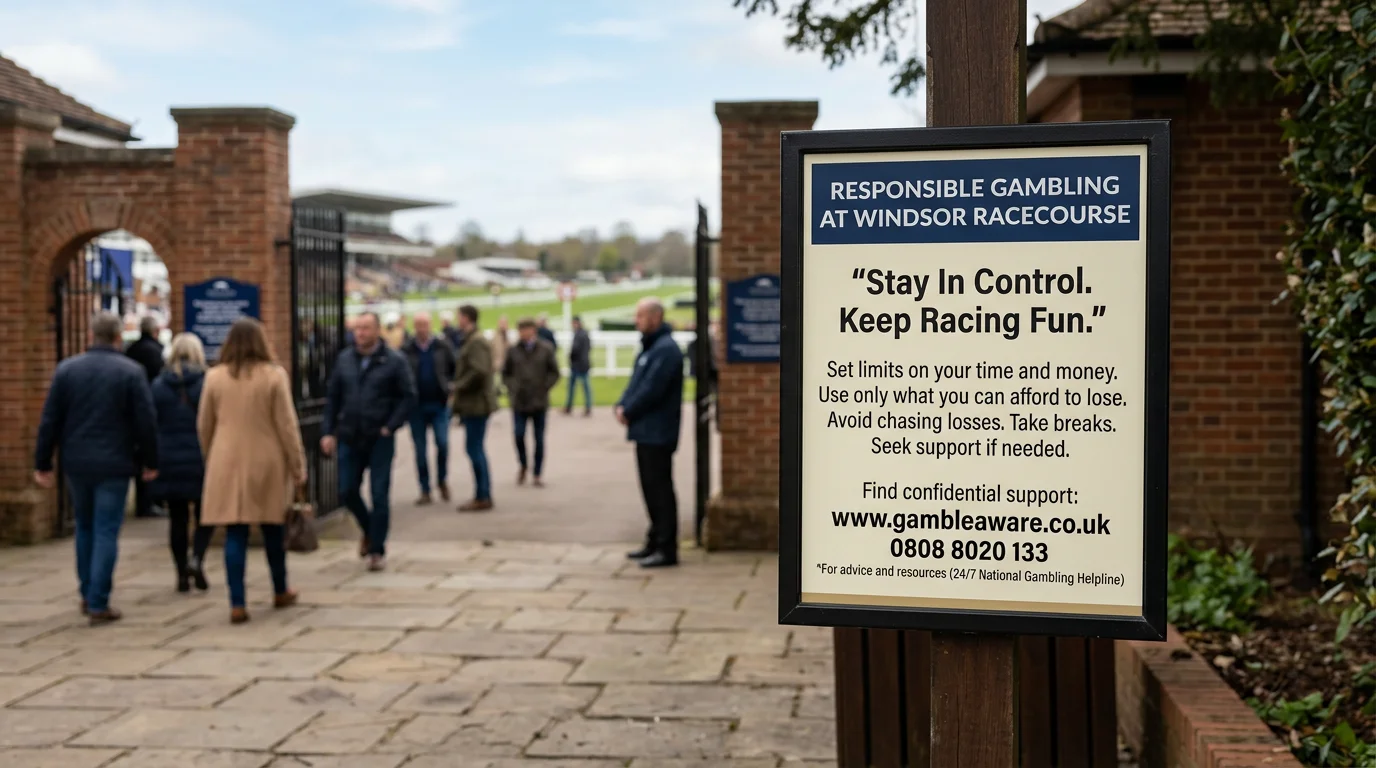
Betting Should Add to the Racing — Not Take Away from Everything Else
This guide exists because betting on racing at Windsor is meant to be enjoyable — an extension of the sport, not a source of financial or personal harm. For the vast majority of people who bet on horse racing, that is exactly what it is. According to data cited in BHA evidence to Parliament, the problem gambling rate among those who bet on horse racing is approximately 2.8% — one of the lowest figures across all forms of gambling. That means roughly 97 out of 100 racing bettors maintain a healthy relationship with the activity. Responsible Gambling at Windsor — More on this topic at windsor betting.
But 2.8% is not zero. And for the people who fall within that percentage, the consequences can be severe. The regulatory landscape in the UK has shifted substantially in recent years, with new tools and mandatory safeguards designed to catch problems before they escalate. Whether you are a regular Monday evening punter at Windsor or an occasional visitor, understanding what protections exist — and how to use them — is as important as understanding the racecard.
What Changed in October 2025: Mandatory Limits and Affordability Checks
The most significant regulatory change for UK bettors came into effect on 31 October 2025, under the Gambling Commission’s affordability framework. Two new requirements now apply to every licensed bookmaker operating in Britain.
First, all bookmakers must prompt customers to set a deposit limit before their first deposit. This is not optional — the prompt is a mandatory step in the account setup process. You can choose any figure, and you can adjust it later, but the act of setting a limit at the outset forces a conscious decision about how much money you are prepared to put into a betting account. If you are opening an account to use a free bet offer for a Windsor meeting, set the deposit limit at the minimum required to qualify. You can always raise it later if your circumstances change; lowering it takes effect immediately.
Second, bookmakers must conduct light-touch financial vulnerability checks when a customer’s net deposits (deposits minus withdrawals) exceed £150 within any rolling 30-day period. These checks use publicly available data — such as bankruptcy orders, County Court Judgements and Debt Relief Orders — to identify customers who may be in significant financial difficulty. They are frictionless: the customer does not need to provide documents, and betting can continue while the check takes place. The Gambling Commission introduced the requirement in stages — initially at a £500 threshold from August 2024, lowering to £150 from February 2025. For the regular Windsor punter whose betting stays within modest boundaries, these thresholds are unlikely to be triggered. For anyone who finds themselves approaching them, the thresholds serve as an external signal that spending may be escalating beyond healthy levels.
The practical impact on recreational bettors is minimal. If your evening budget for a Windsor meeting is £50 and you attend two or three meetings a month, your net deposits are unlikely to approach £150 in any 30-day window unless you are depositing significantly more than you are withdrawing. In that scenario, the check itself is doing exactly what it is designed to do: prompting a pause and a review of whether the current level of activity is sustainable.
Self-Exclusion, GAMSTOP and Cooling-Off: The Full Toolkit
Beyond deposit limits and affordability checks, the UK regulatory framework provides several tools for bettors who want to restrict or pause their gambling activity.
Self-exclusion allows you to block yourself from a specific bookmaker for a period of at least six months. During that period, the bookmaker must close your account, return any balance, and refuse to accept bets from you. Self-exclusion is available through every licensed operator’s website or app, and it takes effect immediately. It is designed for situations where you have decided that your relationship with a specific bookmaker has become unhealthy and you want a clean break.
GAMSTOP extends self-exclusion to all UK-licensed online gambling operators simultaneously. By registering with GAMSTOP, you block yourself from every licensed website and app for a minimum of six months, with options for one year or five years. This is the most comprehensive self-exclusion tool available in the UK, and it covers online betting, casino, bingo, and all other licensed gambling products. It does not cover on-course bookmakers or Tote windows at the racecourse itself — if you attend Windsor in person, you would need to manage that environment separately.
Cooling-off periods are shorter-term pauses — typically 24 hours, 48 hours, or seven days — offered by most bookmakers as an alternative to full self-exclusion. A cooling-off period temporarily restricts your account without closing it, allowing you to step back from betting for a defined period. This is useful after a bad evening where the temptation to chase losses is high: activate a 24-hour cooling-off period before you have time to deposit more, and by the time it expires, the impulse will have passed.
The growth of unlicensed gambling platforms — the IFHA reports a 522% increase in UK visitors to unlicensed betting sites between 2021 and 2024 — underlines why these tools matter. Licensed operators are regulated, subject to the Gambling Commission’s oversight, and legally required to offer self-exclusion, deposit limits, and affordability checks. Unlicensed sites offer none of these protections. Staying within the licensed ecosystem is not just a legal question — it is a safety question.
Support Resources: Who to Contact and When
If you or someone you know is experiencing difficulties with gambling, several organisations provide free, confidential support. GamCare operates the National Gambling Helpline and offers online chat, email support, and face-to-face counselling through a network of local providers across the UK. The Gordon Moody Association provides residential treatment for severe gambling addiction. GambleAware funds research, education, and treatment services and maintains a directory of local support options.
At Windsor Racecourse itself, responsible gambling information is displayed at the venue, and staff are trained to direct anyone who asks to appropriate support services. If you are attending a meeting and feel that your betting is becoming difficult to control, speaking to a member of staff or stepping away from the betting ring is a reasonable and respected step.
The important thing is to act early. Problem gambling tends to escalate gradually — a slightly larger bet here, a chase after losses there — rather than arriving as a single dramatic event. The tools described in this guide are most effective when used proactively, before a problem develops, rather than reactively after harm has occurred. See also Windsor Race-Day Experience.
One Rule That Matters More Than Any Staking Plan
The BHA has been vocal about the regulatory environment facing British racing. In an open letter ahead of the November 2025 Budget, the authority warned of clear political, economic, social, and cultural risks if the government proceeded with a proposed increase to remote betting duty — a threat the Chancellor ultimately chose not to act on for horseracing. That broader debate matters, but for the individual bettor, the most relevant rule is personal: never bet more than you can afford to lose, and use every tool available to enforce that limit. Deposit limits, cooling-off periods, GAMSTOP, self-exclusion — they exist because the industry and the regulator recognise that willpower alone is not always enough. Betting should add to the racing. If it is taking away from everything else, the tools are there. Use them.
