
 Available in US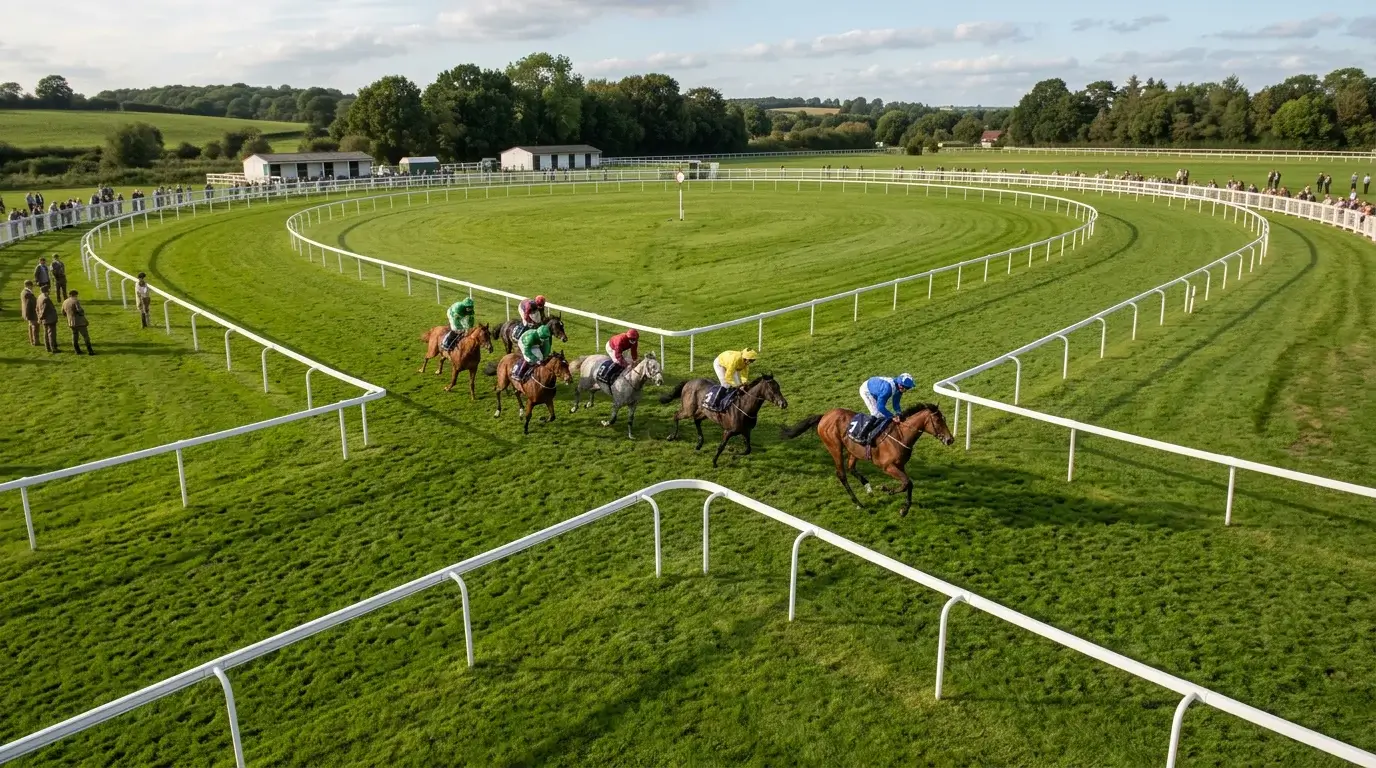
Mile Races at Windsor Are Where Draw Fades and Class Shines
If sprint races at Windsor are dominated by the stall and the first furlong, mile races shift the emphasis towards the horse itself — its class, its stamina, and its ability to travel through a race and quicken when asked. The draw data at a mile shows only weak evidence for a high-stall advantage, and even that marginal edge largely disappears in smaller fields. At 1m2f, draw bias is negligible. What replaces it is a set of variables that reward deeper form analysis: the quality of recent opponents, the horse’s ability to handle the figure-of-eight, and whether it has the tactical speed to challenge on Windsor’s short home straight. Betting on Windsor Mile Races — More on this topic at windsor betting.
Mile and middle-distance races at Windsor tend to attract smaller fields than the sprints — seven or eight runners is common, sometimes fewer in conditions races. That compression of the field makes each selection decision more consequential and pushes value towards win-only betting in many cases. This guide covers the characteristics of each trip, the role of the figure-of-eight layout, and the class-and-stamina filters that matter most at a mile and beyond.
1 Mile vs 1m2f: What Each Trip Demands from a Horse
At one mile, the field covers the full figure-of-eight layout, passing through the crossing point once and navigating multiple right-handed bends before entering the home straight. The run from the stalls to the first bend is long enough that jockeys can settle their horses and find a position without the frantic early speed that characterises sprint races. Pace still matters — Windsor’s structural bias towards prominent racers holds at a mile — but the advantage is less extreme. A horse held up in fourth or fifth has a realistic chance of making ground in the closing stages, provided it possesses a genuine turn of foot.
At 1m2f, the additional two furlongs increase the stamina demand and extend the race through a different portion of the track. Horses at this trip need to sustain their effort for longer, and the figure-of-eight’s tight turns become a test of balance and efficiency over a more prolonged period. The Group 3 Winter Hill Stakes — Windsor’s most prestigious flat race — is run over 1m2f, and the quality of horse that contests it reflects the trip’s demand for both class and endurance. The draw is irrelevant at this distance; the result is determined by ability, fitness, and jockeyship.
At 1m3½f (officially 1m3f99y), the longest distance available at Windsor, stamina is the dominant factor. These races attract stayers and middle-distance types stepping up in trip, and the form book becomes the primary selection tool. Ground preference is particularly important at this trip — a horse that handles soft going over ten furlongs is not the same proposition as one that excels on good ground over a mile.
How the Figure-of-Eight Layout Affects Mile Races Specifically
The figure-of-eight creates racing conditions at a mile that do not exist at more conventionally shaped tracks. At Windsor — one of only two figure-of-eight courses in Britain — the mile-race field negotiates the crossing point, multiple changes of direction, and the camber shifts that accompany each bend. A horse that races at Newmarket, where the mile course is essentially straight, faces none of these challenges. A horse that races at Ascot, where the bends are wide and gradual, faces them in a milder form.
The practical implication is that course form at Windsor over a mile is disproportionately important. A horse that has run twice at Windsor over a mile and finished in the first four each time has demonstrated it handles the track — the turns, the camber, the crossing, and the short home straight. A horse with brilliant mile form from galloping tracks but no Windsor experience is an unknown quantity at this specific venue. The form might transfer perfectly, or the horse might struggle with the constant changes of direction and fail to find its rhythm.
The short home straight is the other Windsor-specific factor at a mile. At Newmarket, the final three furlongs are run on a straight course, giving closers ample room and time to overhaul front-runners. At Windsor, the home straight is substantially shorter, and horses that challenge from two furlongs out must commit earlier and sustain their effort through the final bend and into the straight. This geometry rewards horses with tactical speed — the ability to quicken for a sustained effort rather than produce a single explosive burst — and penalises horses whose closing style depends on a long, flat run-in.
Class Indicators and Stamina: The Selection Filters
At sprint distances, the draw is the primary structural filter. At a mile and beyond, class replaces it. The question shifts from “where is the horse drawn?” to “how good is this horse relative to this field?”
Official ratings provide the baseline, but at Windsor they need supplementary context. A horse rated 80 that earned its mark in competitive mile races at Ascot and Goodwood is a different proposition from one rated 80 based on performances in weaker company at smaller tracks. The class of the races that produced the rating matters as much as the number itself. When assessing mile runners at Windsor, look at where the rating was earned: horses dropping in class from stronger tracks into Windsor’s evening handicaps carry a hidden edge that the raw number does not reveal.
Stamina becomes a selection criterion at 1m2f and beyond but can also be relevant at a mile on testing ground. A horse with a mile pedigree and a record of racing prominently on good ground may find a mile on soft ground equivalent to a 1m2f test in terms of physical demand. The going stretches the effective distance of the race, and horses without genuine stamina reserves can empty in the final furlong. If the going is soft at Windsor and you are assessing mile runners, give preference to those with form over 1m2f on better ground — they have the stamina reserves to cope when the surface makes the trip ride longer.
Trainer patterns at middle distances are worth tracking separately from sprint patterns. Some yards are renowned for their mile horses — well-bred types aimed at conditions races and Pattern-level contests — while others specialise in staying handicappers. At Windsor, where the evening card might include both a conditions mile and a 1m2f handicap, the trainers targeting each race type tend to differ. A horse from a yard that consistently produces smart milers, entered in a conditions race at Windsor, is a more significant signal than the same horse entered at a generic midweek meeting elsewhere. See also Windsor Racecourse Betting Types Compared.
The Mile Bettor’s Advantage at Windsor
Mile races at Windsor strip away the draw noise that dominates sprint analysis and reward the bettor who can assess class, course suitability, and tactical speed. The figure-of-eight layout gives Windsor’s mile programme a character that does not replicate elsewhere in British flat racing, and that distinctiveness is your advantage: the horse that handles the track, the horse that can quicken on a short home straight, and the horse that is dropping in class from better company — these are the angles where class shines through. The draw will not help you here. Your form book will.
