
 Available in US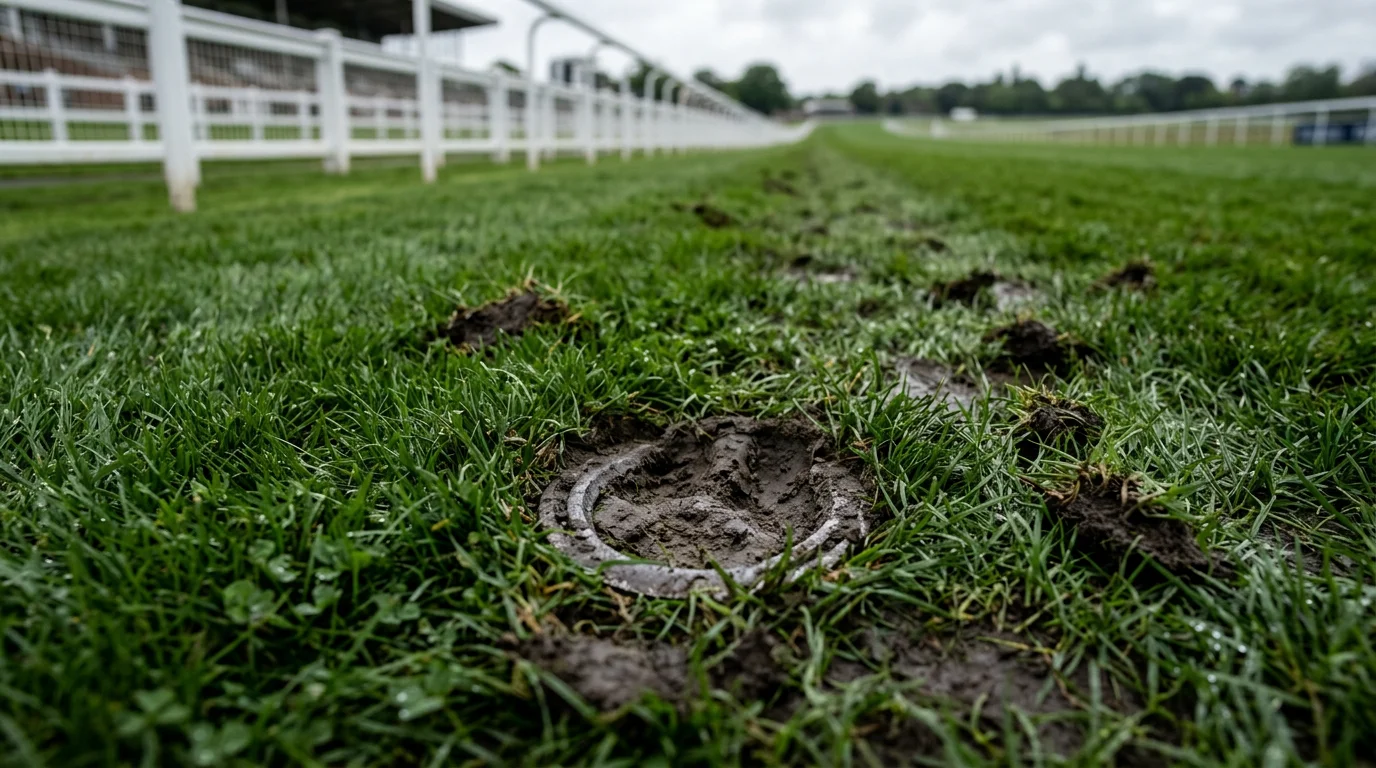
- Windsor Sits in a Thames Flood Plain — and the Ground Tells the Story Before the Runners Do
- The UK Going Scale: From Firm to Heavy at Windsor
- Seasonal Patterns: When Windsor Rides Fast and When It Rides Slow
- How to Adjust Form Figures for a Going Change
- Check the Going, Then Check It Again Before the First
Windsor Sits in a Thames Flood Plain — and the Ground Tells the Story Before the Runners Do
Every racecourse in Britain contends with weather, but Windsor’s relationship with the ground is more specific than most. The course sits on a narrow island in the Thames flood plain, bordered by water on both sides. The soil is alluvial — deposited by the river over centuries — and it drains differently from the chalk downlands of Epsom or the sandy heathland of Newmarket. When it rains at Windsor, the water table rises quickly. When it dries, the surface can firm up faster than expected. That interplay between the Thames basin and the topsoil creates ground conditions that are both predictable in their seasonal patterns and capable of shifting through a single evening’s card. How Ground Conditions Affect Racing at Windsor — More on this topic at windsor betting.
For bettors, the going is not a footnote — it is a variable that interacts with every other factor in the race. Draw bias changes on soft ground, with analysis showing that high-draw advantages amplify on testing going at sprint distances. Pace bias holds across all conditions but manifests differently. And individual horses’ form can swing by several lengths depending on whether the ground rides firm or soft. This guide treats the going as what it is at Windsor: the first thing to check and the last thing to forget.
The UK Going Scale: From Firm to Heavy at Windsor
The official going in British racing is reported on a seven-point scale: Hard, Firm, Good to Firm, Good, Good to Soft, Soft, and Heavy. Hard is extremely rare on turf and virtually never declared at Windsor. Heavy is uncommon during the flat season but possible in the jumps fixtures that now run through winter. The vast majority of Windsor’s flat meetings take place on Good to Firm or Good ground, with Good to Soft appearing after sustained rain and Soft ground emerging occasionally in early spring or late autumn.
The going is measured using a GoingStick — a handheld device that the clerk of the course pushes into the turf at multiple points around the track. The reading is a numerical value on a scale from 0 to 15 that maps broadly to the verbal descriptions. According to the BHA’s published TurfTrax GoingIndex scale, readings of 1.0–2.9 correspond to Heavy; 3.0–4.9 to Soft; 5.0–6.9 to Good to Soft; 7.0–8.9 to Good; 9.0–10.9 to Good to Firm; and 11.0 and above to Firm. In practice, the GoingStick is course-specific — the same reading can mean slightly different conditions at different venues depending on soil type — so it is most useful when compared against historical readings at the same track. The clerk takes readings at several locations and declares the going as a single description, sometimes with regional variations (for example, “Good, Good to Soft in places”).
At Windsor, the going can vary between different parts of the track at the same meeting. The crossing point, which receives the most traffic, tends to ride softer than the rest of the course by the later races. The far-side strip — used by high-drawn horses in sprint races — may ride differently from the stands-side rail if the morning watering was uneven. These within-meeting variations are not reflected in the official going declaration, which is a single headline figure. Experienced Windsor bettors learn to read between the lines: if the going is declared Good but the first two races produce slow times, the ground may be riding softer than advertised.
Seasonal Patterns: When Windsor Rides Fast and When It Rides Slow
Windsor’s 26 fixtures in 2026 span ten months of the year, from April flat meetings through the January Berkshire Winter Million. The going follows a broadly predictable seasonal arc, with exceptions driven by weather.
April and early May meetings tend to produce Good to Soft or Good ground. The water table is still relatively high from winter rainfall, the turf has not yet hardened, and occasional spring showers keep the surface moist. Horses with a preference for an ease in the ground often perform well in the early fixtures.
June through August is the driest period. The ground firms up, and Good to Firm is the default declaration for most summer Monday evenings. If a prolonged dry spell coincides with the late-July and August fixtures — when the Winter Hill Stakes and the peak of the summer programme fall — the ground can approach Firm. Racecourse watering mitigates the worst of this, but watering does not replicate natural rainfall evenly, and some strips of the track will ride faster than others.
September and October bring the transition back towards softer conditions. Early autumn rain on ground that has baked through summer creates variable going — the surface may appear green and fresh, but the top layer softens while the subsoil remains hard, producing “false ground” that rides differently from the official description. Late-season meetings at Windsor are where ground assessment skills are tested most: the declared going and the actual going can diverge noticeably.
The December and January jumps fixtures — the Berkshire Winter Million and associated meetings — operate under entirely different ground conditions. Winter meetings expect Soft or Heavy ground as standard, and the risk of frost or waterlogging adds the possibility of abandonment. These fixtures attract jump horses accustomed to testing conditions, and the betting approach shifts accordingly: stamina and jumping ability matter more than speed, and form on soft or heavy ground is the primary filter.
How to Adjust Form Figures for a Going Change
A horse’s form on Good ground is not automatically transferable to Soft ground — and vice versa. Some horses are genuinely versatile and perform across conditions; others have a pronounced preference that can swing their finishing position by several places.
The simplest adjustment is to check each horse’s record by going. Most form services allow you to filter a horse’s past performances by ground condition. A horse with three wins from four starts on Good to Firm and zero wins from five starts on Soft is telling you something clear: it does not handle testing ground. Backing it on a Soft evening at Windsor is betting against the evidence.
A subtler adjustment involves relative performance. A horse might have acceptable form on Soft — finishing third and fourth — but its Good-ground form shows wins and seconds. That horse does not fail on Soft; it merely underperforms relative to its best. If the going changes from Good (as expected) to Good to Soft (after afternoon rain), that horse might still run well — but its chance of winning specifically has decreased, and its each-way appeal may actually increase. The going change did not make the horse bad; it shifted the probability distribution of its finishing position.
Trainer patterns also interact with ground conditions. Some yards specialise in horses that handle cut in the ground; others are renowned for fast-ground performers. At Windsor, where the going can change during the evening, a trainer who has declared a horse for a later race may have factored in the likely going at that point — not the morning declaration. If a trainer with strong soft-ground credentials enters a horse in the 8pm handicap on a day when rain is forecast for the afternoon, the inference is worth noting. See also Windsor Seasonal Calendar.
Check the Going, Then Check It Again Before the First
The going at Windsor is declared in the morning and can change by the evening. Rain, watering, drying — all of these shift the conditions between the clerk’s first reading and the opening race. Check the official going when it is declared, then check again an hour before the first race. If the going has changed, reassess your selections. A horse you fancied on Good to Firm at 8am may be a weaker proposition on Good to Soft at 5pm. The ground tells the story first — and at Windsor, where the Thames basin makes the surface more reactive than most, it tells it loudly.
